Business and
strategy
A roadmap
for the future
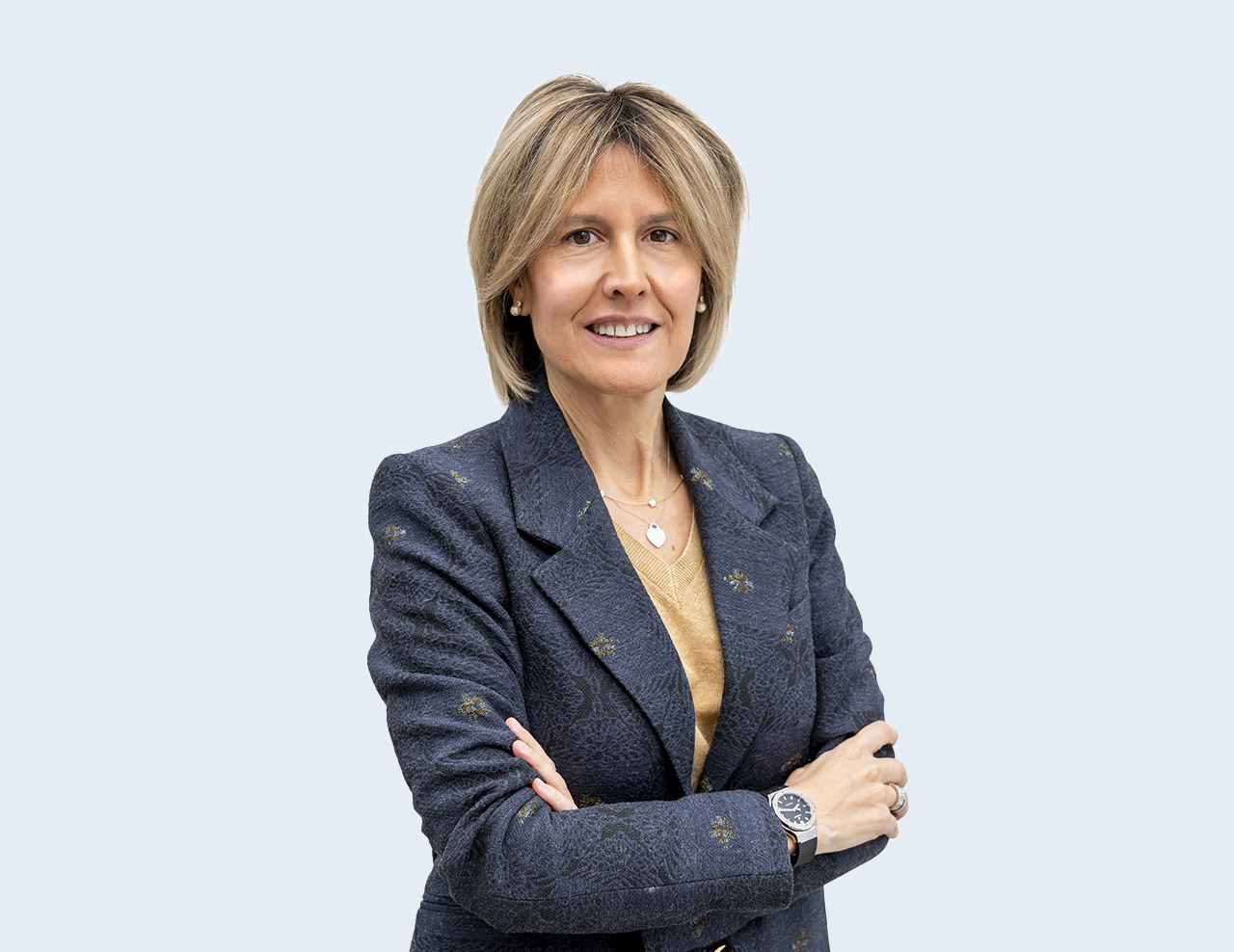
Letter from the CEO, Cristina Blanco
2025 was a particularly demanding year for Antolin. Recognizing that both manufacturers and suppliers are implementing cost-cutting measures to remain competitive, we have reassessed our priorities and strengthened the core pillars of our business to focus our efforts on what sets us apart: operational strength, rigorous execution, and responsiveness to our customers.
At a glance
9 of the 10
best-selling vehicles in the world feature Antolin products
10
programs drive the Strategic Technology Plan
60
new innovation projects
114
leading brands in the auto industry
0%
product safety incidents
100%
scope of geographical locations and business units – Antolin Industrial System
New syndicated loan of €150M with the Official Credit Institute (ICO)
and five of its main financial institutions
and five of its main financial institutions
Value creation
and business model
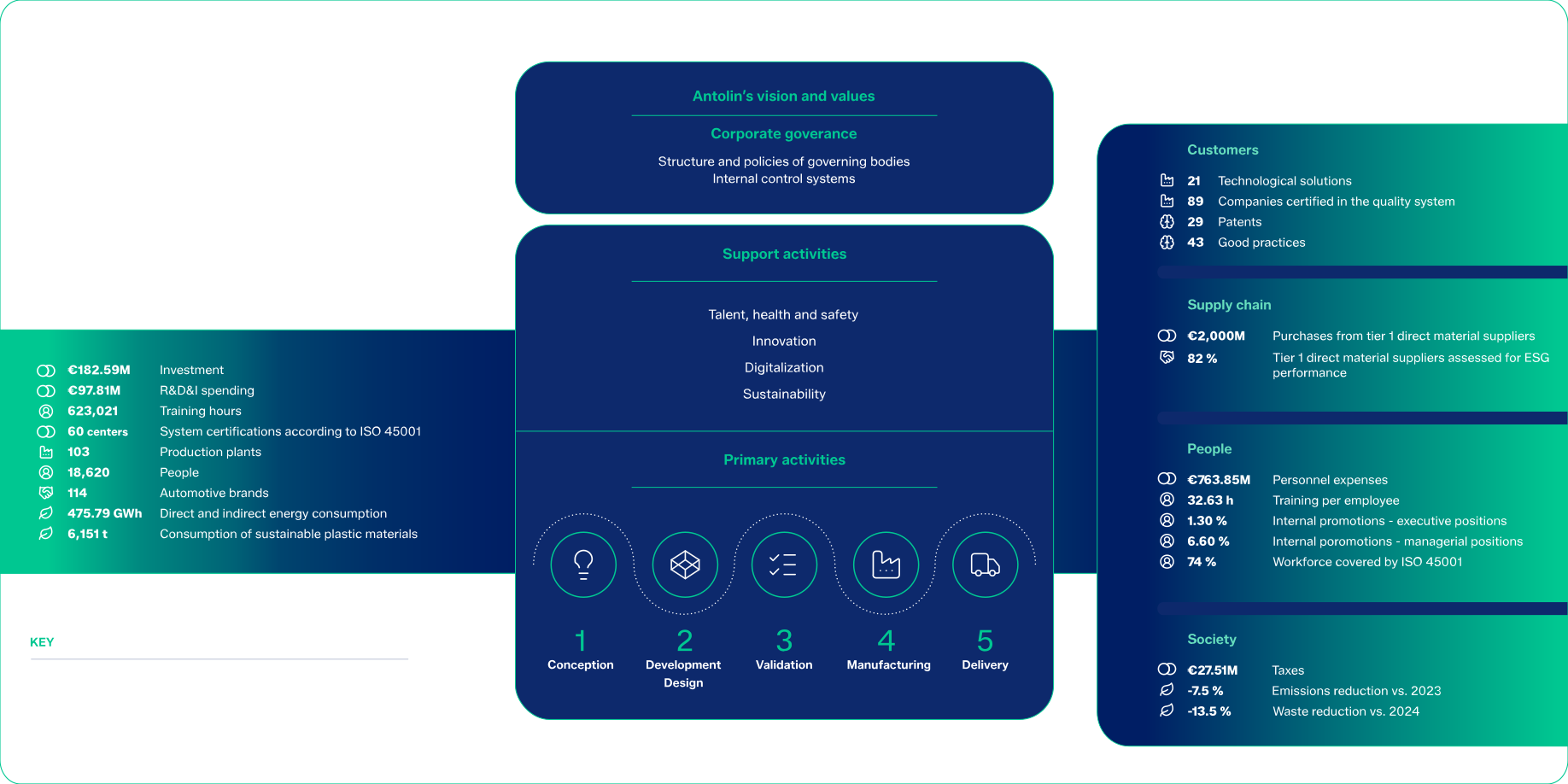
Strategic management adapted to the context
Monitoring and alignment of the 2025-2027 Strategic Plan to strengthen competitiveness, agility and cash generation with an efficient allocation of capital, advances in cost structure, data governance and diversification to improve the resilience of the business. Fostering of key levers such as artificial intelligence, organizational redesign and industrial expansion in Asia to accelerate the transformation.
Levers of the 2025-2027 Strategic Plan
Customer-centric culture
Operational and industrial excellence
Technological development, innovation, sustainability and digitalization
Talent, team commitment and managerial leadership
Innovation
New 2025-2027 Strategic Plan for R&D&I, rooted in the following priorities:
Projects that research and validate new materials, component designs and manufacturing processes that measurably reduce the environmental footprint, facilitate circularity and enable more recycled or bio-based content to be incorporated into vehicle interiors.
Projects that turn interior surfaces and components into smart surfaces with lighting, signage, touch/haptics, audio and even AI support in the design. This optimizes performance, cost and weight to bring safety and comfort features to a wider market.
Projects that drive Industry 5.0 at Antolin through automation, AI and artificial vision to improve traceability and inspection in real time, reduce defects and waste, optimize production flows and thus increase the efficiency and sustainability of the plants.
Key projects
Digitalization
The main priorities of Antolin’s digitalization process are:
Fostering of the use of Artificial Intelligence in processes and services
Automation and standardization globally to improve competitiveness and efficiency
Strengthening of cybersecurity to protect operations
Corporate governance
Review of strategic priorities and disciplined adaptation of the business plan to balance operational urgencies with a long-term vision, protecting profitability, liquidity and sustainability in an environment marked by emissions regulations, tariffs and OEM price pressure.
In 2025 women had the following representation in Antolin:
40%
in governing bodies
60%
in the Board of Directors
20%
on the Advisory Board
Sustainability
Updating of sustainable business objectives in the three pillars of value creation.
Net-Zero ambition by 2040
- Carbon neutrality by 2035 in scopes 1 and 2
- Reduction of scope 3 emissions: 44% by 2035 and 100% by 2040 vs. 2023
Circular business
- Ecodesign and life cycle analysis of 100% of new projects by 2030
- 40% of sustainable plastics with circular content ≥20% by 2030
- 10% reduction in non-hazardous waste and packaging by 2028 (vs. 2023) to reach “Zero Waste to Landfill”
Zero accidents: wellbeing, occupational health and safety
- 5% annual reduction in the overall accident frequency rate to 1.85 in 2030 (Baseline year 2024: 2.52)
- Increase of 4 points in the target category “sustainable engagement” in the 2025 climate survey for top and middle management profiles
Diversity, equity and inclusion, applied to talent
- Gender pay gap of no more than 5% in 2026
- Diagnosis and action plans with partial targets by geographical location in 100% of the centers by 2028
Talent and just employment transition
- 45% internal promotion of talent with upskilling and reskilling criteria in 2028
Governance and remuneration
- Variable management remuneration linked to sustainability targets
Ethics, human rights and business conduct
- 100% of the workforce trained in the Code of Ethics and Conduct in 2026
- 100% of substantiated sustainability complaints resolved annually (value chain scope)
- Early warning regulatory radar in 2026 with impact within 30 days at most
- Monthly compliance and data protection reporting (training, incidents, penalties and donations) by 90% of companies with 98% compliance in 2026
- Implementation of an Artificial Intelligence governance framework with a 95% compliance rate in annual reviews
Responsible supply chain
- 95% adherence to the Supplier Code of Conduct by 2028, 97% by 2030
- 95% of direct supply chain assessed on sustainability criteria by 2028 (90% in 2026)
- 94% adherence to CMRT (Conflict Minerals Reporting Template) with 0% sanctioned suppliers in 2026
- Deploy actions to require, measure and monitor sustainability objectives to 90% of the supply chain by 2030 (key suppliers of direct production material, top 7 purchasing families)
- Incorporation of sustainability criteria in 100% of the visits carried out annually by the Supplier Technical Assistant (STA)
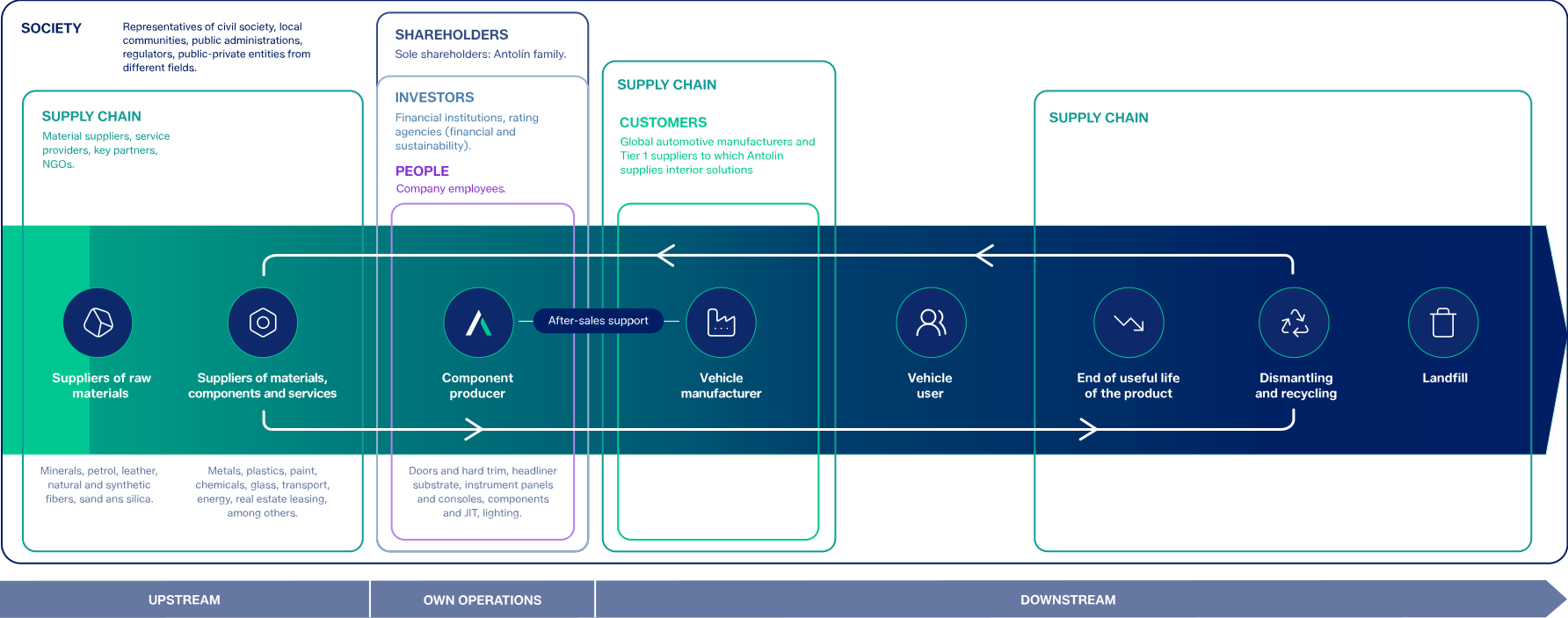
Mapping of the value chain
Six main stakeholders: shareholders, investors, customers, employees, the supply chain, and society.
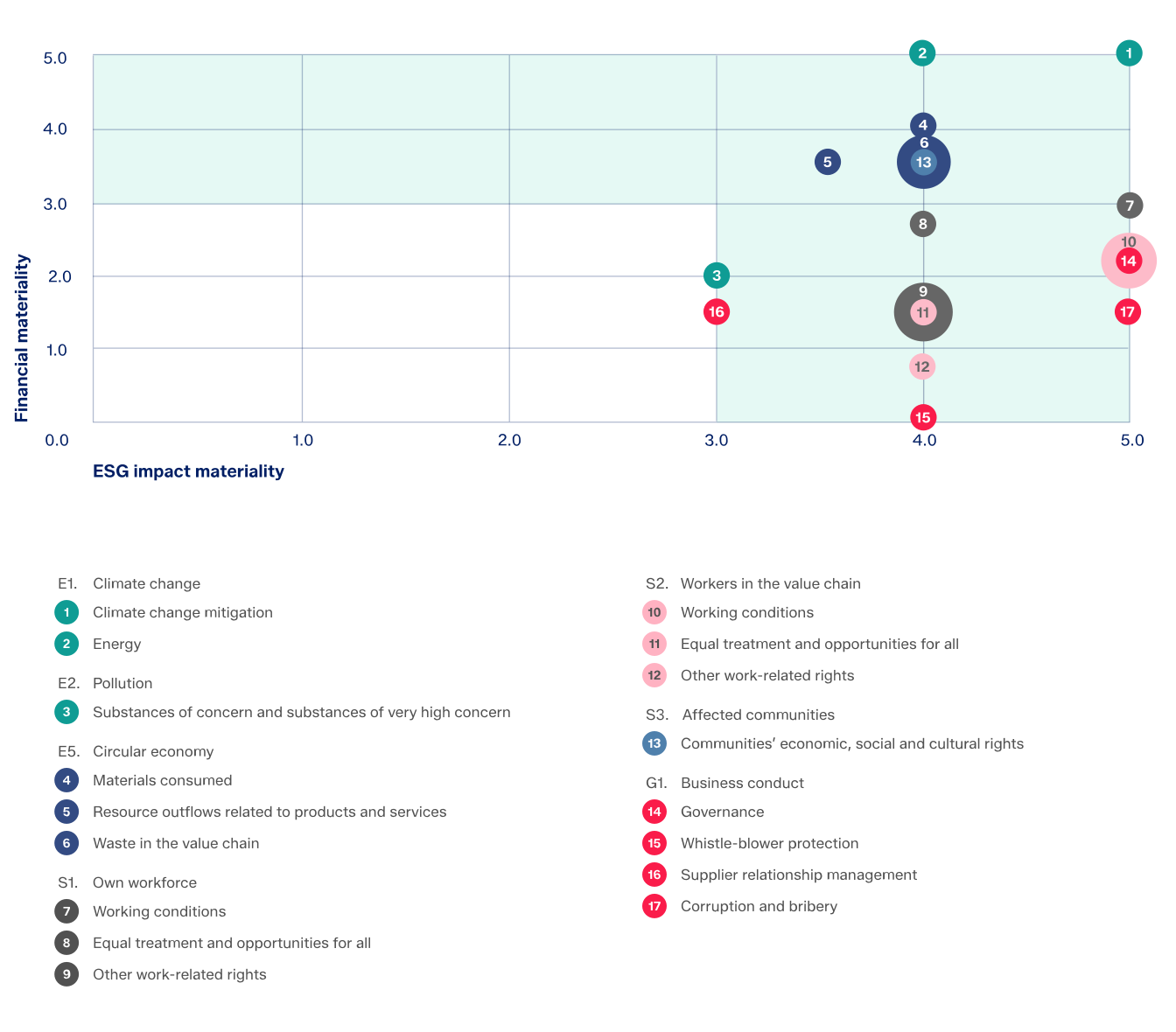
Double materiality matrix
17 material topics
PAST, PRESENT AND FUTURE
Change, inside and out
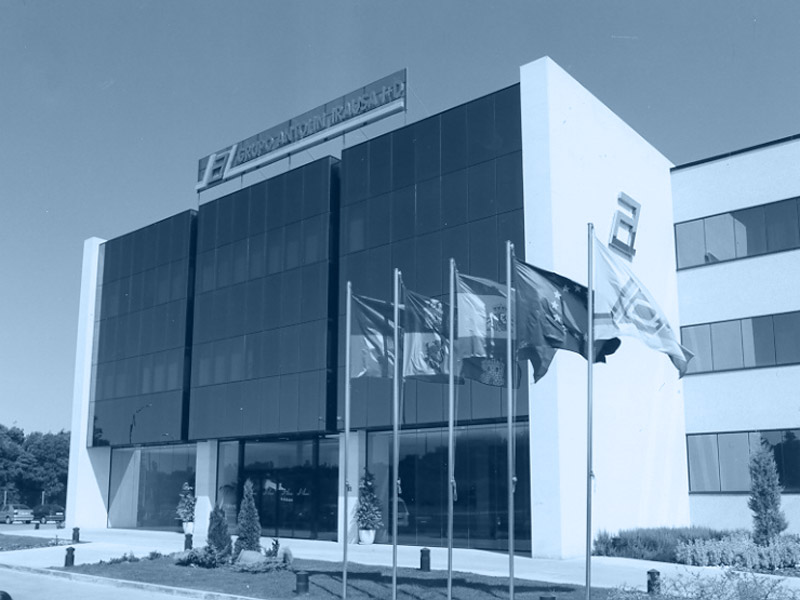
The birth of craftmanship
In the early years, Antolin’s identity spoke the language of the workshop: industrial, sober and closeness. It was a brand built on craftsmanship and trust, designed to reflect the strength and reliability of a family business. More than differentiating itself, it sought to find recognition, to show what Antolin and its work were all about. This simple and honest visual basis established an idea that is still alive today: to grow without losing our ties to where we began.
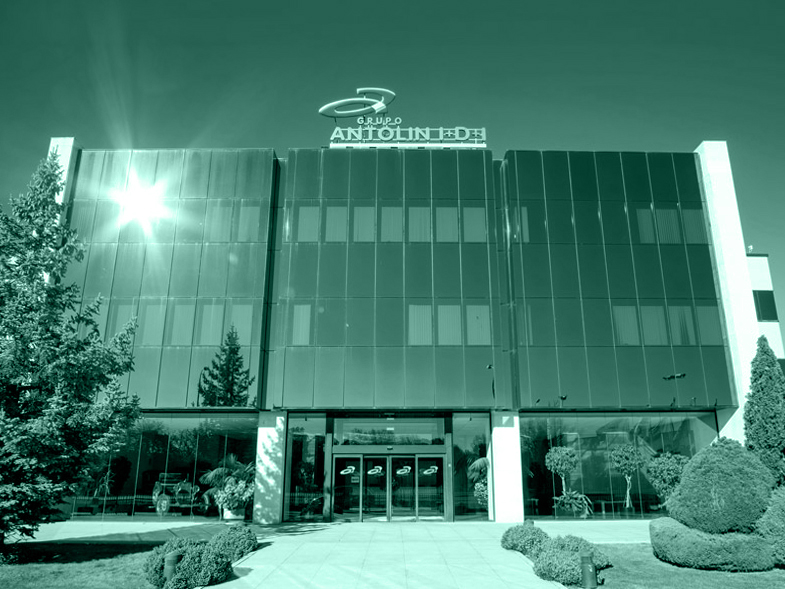
Competing in a global world
With the internationalization, especially since the 1990s, the brand became a lever for evolution. Innovation marked a turning point: Antolin needed an image capable of accompanying its ambition and its presence in new markets. The internationalization and generational changeover of 2015 drove a more modern branding, aligned with a new corporate reality focused on progress, vision and consistency.
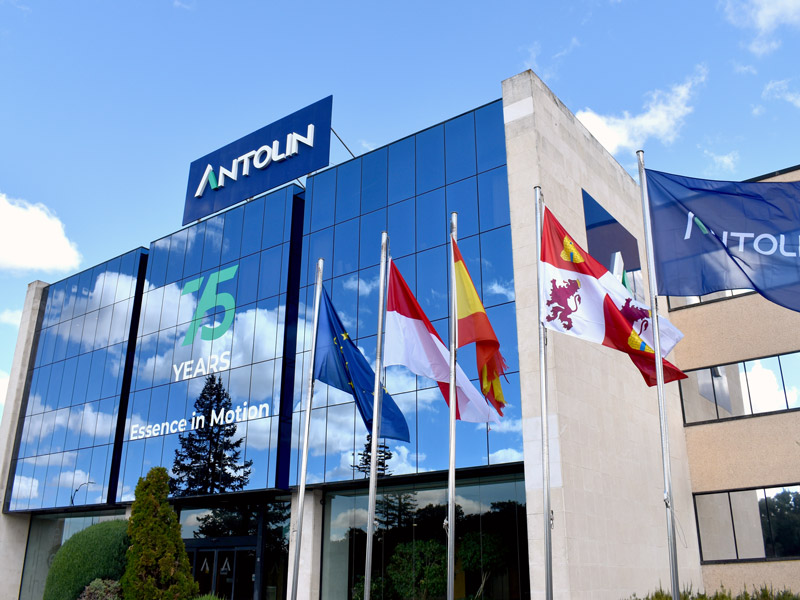
Evolving without losing our essence
Today, the Antolin brand expresses more clearly a culture oriented toward innovation, excellence and sustainability. More than a mere formal change, the 2023 rebranding accompanied a new strategic plan and opened a stage of consolidation as a global player, ready to adapt to today’s challenges without giving up the essentials, keeping our essence and purpose intact.